Compare 5-Port Car Chargers by Value, Not Port Count Alone
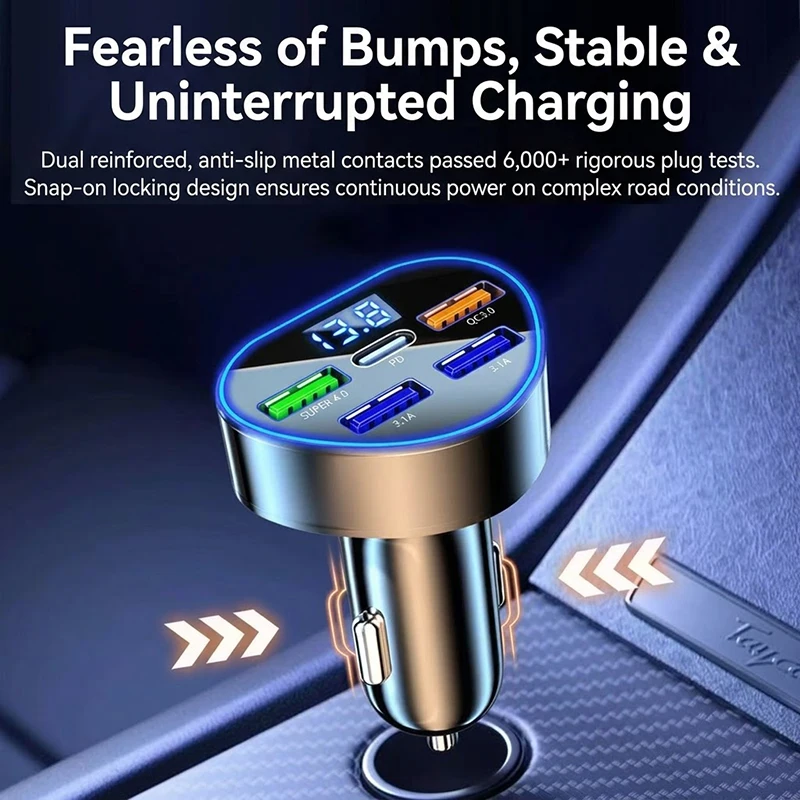
A 5-port car charger price can reflect much more than the number of devices it can connect. For a clearer value comparison, look at the stated charging standards, total output where provided, port layout, and convenience features that matter in your vehicle. The featured listing is relevant for shoppers who specifically want five ports alongside a seller-listed LED voltage display, PD, and QC3.0.
View Current OfferThis page may contain affiliate links. If you purchase through them, we may earn a commission at no extra cost to you.
Three 5-Port Car Charger Options and Their Value Focus
These listings serve different priorities. A basic five-port layout may be enough when device access is the main goal, while named charging standards and a stated total output give charging-focused shoppers more concrete information to compare. An extension layout or voltage display is worth considering when that convenience fits how passengers use the vehicle.
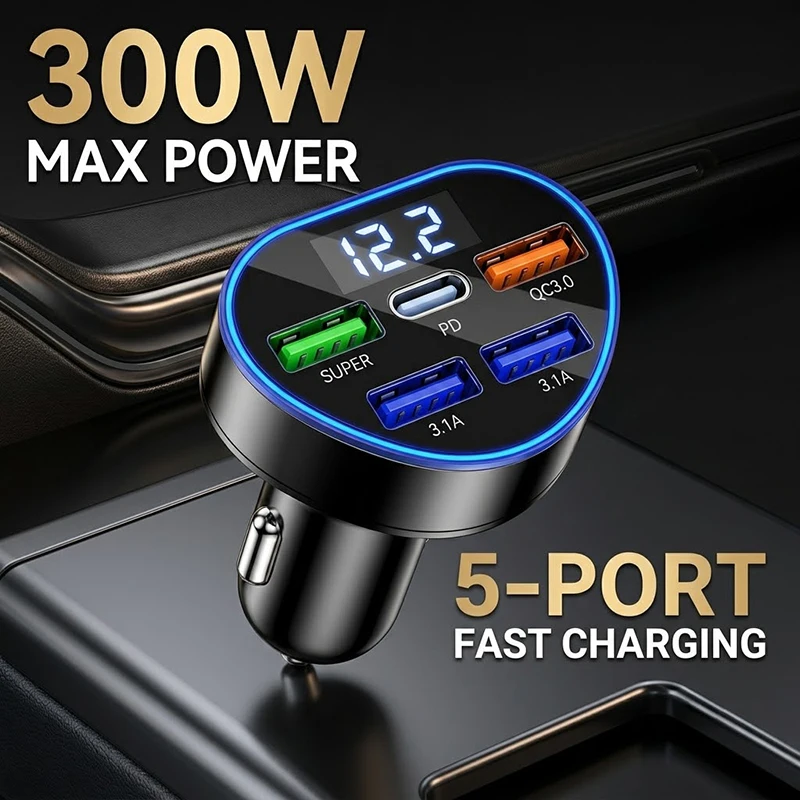
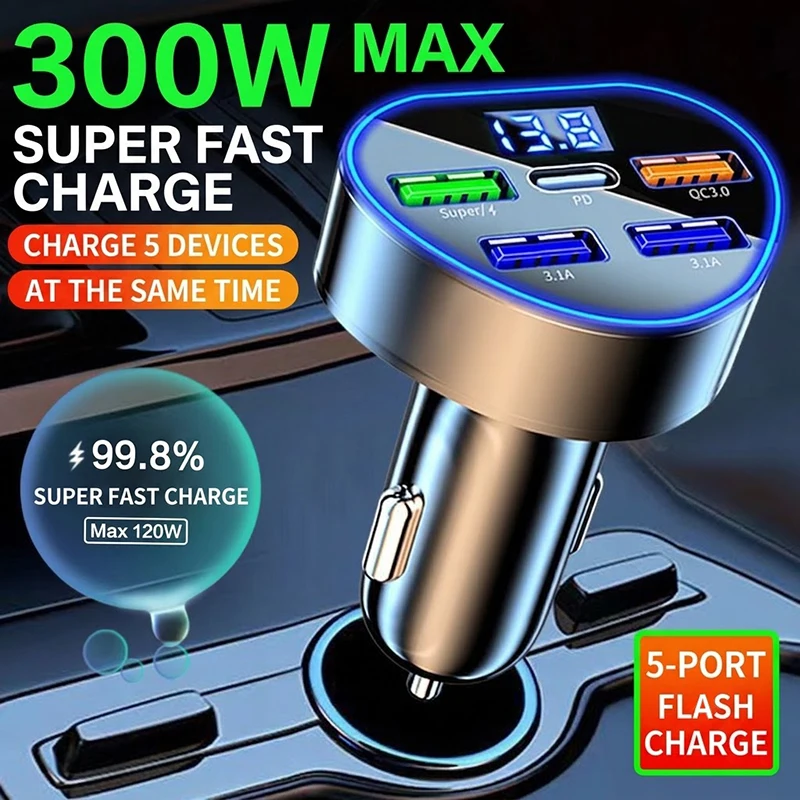
5-Port Car Charger with LED Voltage Display, PD and QC3.0 Fast Charging Adapter, Stable Multi-Device Auto Charger For iPhone 17
A five-port charger listing for shoppers who want a seller-listed LED voltage display along with PD and QC3.0 charging terminology.
- Five-port configuration
- LED voltage display listed in the product title
- PD listed in the product title
- QC3.0 listed in the product title
The supplied listing information does not state total output or port-by-port power allocation.
View Current Offer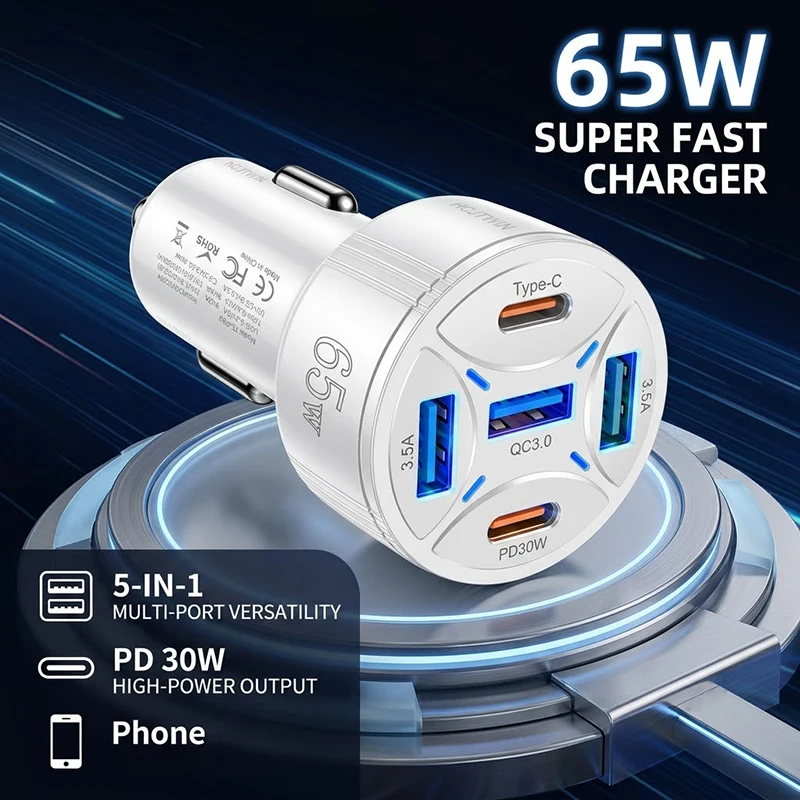
65W Fast Car Charger 5-Port Multi USB C Auto Adapter PD30W QC3.0 Wide Voltage 12V-30V Fits Family Cars For iPhone 17 16 Pro Max
A relevant choice for shoppers who prioritize explicitly stated total output and named PD30W and QC3.0 claims when comparing charging-focused listings.
- Five-port configuration
- Stated 65W total output
- USB-C PD30W stated in the title
- QC3.0 and 12V-30V input stated in the title
The title does not explain how output is allocated when several devices are connected.
View Current Offer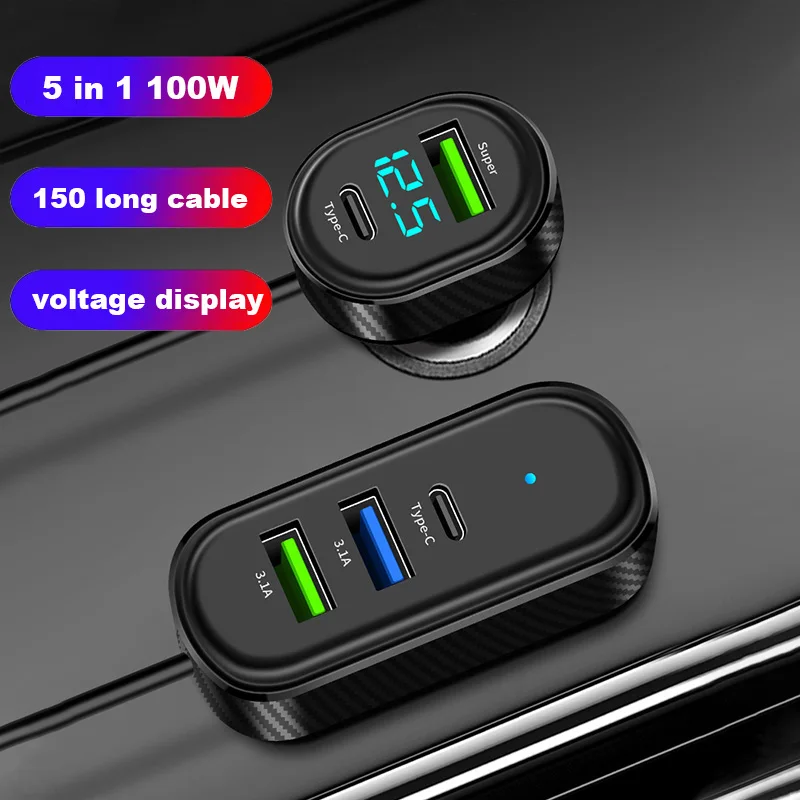
5-Ports 100W USB Type-C Front And Rear Extension Car Charger With 1.5M Extension Cable Fast Charging Power Adapter For Phone
A five-port option aimed at vehicles where front and rear passenger access is more important than keeping every connection at the front console.
- Five ports stated
- Front-and-rear extension layout stated
- 1.5 m extension cable stated
- 100W output stated in the title
The supplied title does not name PD or QC charging standards.
View Current OfferWhat Changes a 5-Port Car Charger’s Value?
Start with the charging information, not just the port count. A listing that states a total wattage and identifies a particular USB-C PD or QC3.0 port gives you more to evaluate than a broad fast-charging claim. Those details can matter when your devices have different charging requirements or when several people may connect devices at once. Port mix also affects usefulness. USB-C and USB-A connections support different cable setups, so count the ports only after checking whether they match the cables and devices in your car. Do not assume every port supports the same standard or can deliver the same output. Convenience features can legitimately influence value when they solve a real need. A voltage display may appeal to drivers who want that information visible, while a front-and-rear extension design may be more useful for passengers than a charger concentrated at the front outlet. Choose the extra feature that fits your seating layout rather than paying attention to feature names alone.
Choose the Layout That Matches How Your Car Is Used
For solo commuting, a compact front-outlet charger with accessible ports may be the simplest approach. For family trips, rideshare driving, or regular rear-seat passengers, cable reach and where the ports are positioned can become a bigger part of the decision than the headline number of ports. Then compare charging claims at the right level. PD and QC3.0 are named standards, whereas “fast charging” by itself does not identify a standard, a port, or an output level. If charging capability is your priority, the listing that states 65W, PD30W, and QC3.0 provides more specific claims to weigh. If display visibility is the priority, the featured LED-display listing is the more directly aligned option. Before checkout, use one short checklist: review the current offer, confirm the port types and any stated total or per-port output, identify which ports are named for PD or QC, check cable length and included accessories if relevant, and review the seller’s return and warranty terms. Also ensure the listing’s stated vehicle-input details and device requirements fit your intended setup.
5-Port Car Charger Price and Value Questions
What affects the price of a 5-port car charger?
Value can differ based on the stated port mix, named charging standards such as PD or QC3.0, total output when listed, voltage-display functionality, and whether the design includes a front-and-rear extension layout. The current offer is the final part of the comparison.
Does a 5-port car charger charge all connected devices at the same speed?
Not necessarily. Charging speed can depend on the charger’s total available output, its port-by-port allocation, the connected devices, and the cables used. A five-port count alone does not establish equal charging capability across every port.
What is the difference between PD and QC3.0 in a car charger listing?
PD and QC3.0 are named charging standards that may be associated with particular ports or supported devices. Their presence is more informative than a general fast-charging label, but shoppers should still read the listing to see which ports and outputs are specified.
What should I check before buying a 5-port car charger with an LED voltage display?
Confirm that the display feature is included in the current listing, then check the port types, any stated output information, the charging standards assigned to individual ports, and whether the layout suits your vehicle and passengers.
Can I assume every port on a multi-port car charger supports fast charging?
No. A listing may name PD or QC3.0 without establishing that every port supports those standards. Look for port-specific information rather than treating a general product title as a claim about every connection.
Make the Choice Based on the Feature You Will Use
Choose the front-and-rear extension listing when rear-seat access is the deciding factor. Consider the 65W listing when its stated 65W, PD30W, and QC3.0 claims are central to your comparison. Choose the featured five-port listing when an LED voltage display, plus seller-listed PD and QC3.0, is the convenience combination you want. Compare the live offers before deciding which one delivers the better value for your setup.
View Current Offer